Somerset Borough Council Minutes
Council Meeting Minutes will be posted after they are approved at the following meeting.

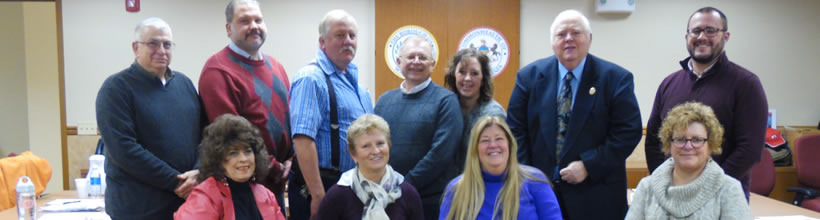
Meet the Somerset Borough Council Members and Staff
Public Comment Policy
The Pennsylvania Sunshine Act (65 Pa. C.S. 701, et seq.) provides that the Board or Council of a political subdivision shall provide a reasonable opportunity at each advertised regular meeting and advertised special meeting for residents of the political subdivision or for taxpayers of the political subdivision or to comment on matters of concern, official action or deliberation which are or may be before the Board or Council prior to taking official action. (710.1).
To assure compliance with the Act, to inform members of the public who may wish to make comment, and to provide for predictable and orderly implementation of the public comment period, Somerset Borough Council has adopted this Public Comment Policy.
2021 Council Meetings |
| January 25th |
| February 22nd |
| March 22nd |
| April 26th |
| May 24th |
| June 28th |
*Council has traditionally rescheduled its November and December meetings based on the timing for budget adoption and the Thanksgiving and Christmas holidays. The rescheduling will be done closer to these dates.
JOINT MEETING
Somerset Borough Council &
The Municipal Authority of the Borough of Somerset
March 22nd, 2021 - 5:00 p.m.
1. Joint Meeting Called to Order
a) Borough Council Meeting Called to Order – President R. Miller
b) Municipal Authority Meeting Called to Order – Chairman Kuhlman
2. Pledge of Allegiance
3. Roll Call:
a) Council Members present: Ruby Miller; Fred Rosemeyer; Pam Ream; Sue
Opp; Steve Shaulis and Gary Thomas
Council Member absent: Lee Hoffman
Also absent: Junior Council Member Sierra Urban
b) Mayor: Scott Walker present
Also present were the following: Borough Manager, Michele Enos; Director of Finance,
Brett Peters; Administrative Assistant, Roger Bailey; Chief of Police, Randy Cox; Solicitor,
James Cascio; Consulting Engineers, Jake Bolby and Tom Reilly (via telephone).
Roll Call:
a) Municipal Authority Members present: William Kuhlman; Vince Jacob; Ruby Miller;
Jessica Sizemore and Ben Flower.
Public Attendance:
a) None
4. New Business – Joint Action
a) Flow Monitoring Study – Presentation by our Borough Engineer to discuss the results of
the Flow Monitoring Study that was performed to investigate the hydraulic overload at our
Wastewater Treatment Plant.
Mr. Bolby reviewed the Flow Monitoring Study, by Power Point presentation, for all Members of Borough Council and the Municipal Authority as follows:
Mr. Bolby said that the results of the Flow Monitoring Study were going to be presented to all Members of Council and the Authority, along with what the outlook can be, for the Sanitary Sewer System to address the hydraulic overload.
Mr. Bolby mentioned that the Sanitary Sewer System is owned by the Municipal Authority and managed by the Borough. The Wastewater Treatment Plant is permitted for 2 million gallons per/day of flow. This is the Borough’s average daily flow. It is permitted for a peak flow of 5 million gallons per/day. There is an additional 1 million gallons for equalization at the Plant. So there is a total of 6 million gallons of water a day that the Wastewater Treatment Plant can process. There are four pump stations, a little over 200,000 linear feet of sewer line, and 912 manholes throughout the Borough.
The hydraulic overload is either one of two things…One, it’s a discharge of the sewage from the sewer system. From the Borough system, this is done through pumping whenever there is a big storm event. The second way the hydraulic overload happens is when there is an overflow at the Wastewater Treatment Plant. Sometimes there is enough flow in the system that there is equalization at the lagoon at the Plant that will fill up and cause an overflow that will spill out from the Lagoon. Pumping does not always occur when there’s an overflow at the Wastewater Treatment Plant, but there is always an overflow when there is pumping.
The other way of being hydraulically overloaded is explained in the second part of the definition from the Department of Environmental Protection. It states that “when there are three consecutive months of being above the permitted flow”, which is the two million gallons per/day. This is stated in the NPDES permit that governs the Wastewater Treatment Plant and the flow limits of the Plant regardless if there is an overflow. In this case, the Borough experiences both.
The Borough has had Notices of Violations from 2016-2020 that was documented by the Department of Environmental Protection. DEP provided a letter directly to the Borough stating that we were hydraulically overloaded. Prior to that, there wasn’t documentation from DEP, but pumping did occur. For the past 25-30 years, the practice of pumping was done in the Borough. Also, the overflow at the lagoon was active during those times. So this has been happening for quite some time, but more recently, it has become a pressing issue because DEP has written it down and provided a Notice of Violation.
Whenever DEP provided the Notice of Violation there were a few requirements that the Borough had to follow. The First Phase was to prepare a Corrective Action Plan. This was done, and we received official approval of the Corrective Action Plan from DEP on October 1st, 2020. Within the approved Corrective Action Plan, there was a schedule that outlined all the Actions which were put into four different categories. A Summary Schedule on the back of the Corrective Action Plan was included. Currently, we are on schedule and within that First Assessment Phase, which includes the Flow Monitoring System Mapping, Cleaning & Televising and Smoke & Dye Testing. Currently, the Cleaning & Televising and Smoke & Dye Testing are being done throughout the Borough. The end date for this Assessment work to be finished is October 31st, 2021.
The Next Phase would be to repair all of the major problems that were found during the First Assessment Phase. After that repair, DEP is requiring Post-Repair Flow Monitoring to assess the problem to see if it still exists after the initial repair. The Final Phase would be totake care of any of the hydraulic overload that remains after those initial major repairs are made.
The Flow Monitoring Study was started in June 2018 and completed in July 2019. We had 12 flow meters spread throughout the system strategically located to isolate different basins within the sewer system. The objective was to locate the source areas of the excess flow, quantify, and also do mapping of the manholes and stormwater as part of the Flow Monitoring Study. All the mapping of the sewer system and stormwater system was done and was stored on the GIS System.
As part of the Capital Planning, the Flow Monitoring Study was authorized and occurred prior to DEP formalizing the Corrective Action Plan, or even the process to start the Corrective Action Plan. So the Borough was pro-active by taking these steps.
Any form of water getting into the sanitary sewer system, through cracks and leaks within the defective piping, results in infiltration which, in turn, causes the hydraulic overload.
Information from the study is being stored on the GIS system, and all the items that they find during the inspection are being mapped. To date, over 1,000 pipe defects have been found, which are all potential sources of infiltration. 174 instances of infiltration were identified. It is mostly dry when they are trying to go through the pipe, so they can see what infiltration is actually happening.
During the Flow Study, we saw an average daily flow just slightly above the permitted average daily flow at 2.25. We also saw instantaneous peak flows between 2018- 2019, when four overflow events, during big storms, occurred during the Flow Study time. When these events happened, there was also pumping occurring. In general terms, the sewer system can handle lessthan what it was seeing. That is where the hydraulic overload is coming from.
After analyzing all the data, and seeing how the flows react through the entire sanitary sewer system, the Engineers are recommending handling up to 16 million gallons per/day, which is less than the peak we saw during the storms. There are different ways of handling the flow by slowing it down, or removing the flow, so those peaks come down. It is relatable to something you can quantify, so it is tied to the “10 year / 24 hour Storm Event.” The reasoning behind this recommendation is that it will address the storms that we saw during the Study period, and it is relatable to a design storm that we can relate to DEP.
Mr. Bolby reiterated that by having 12 flow meters spread throughout the system, we were trying to isolate roblem areas. We found that the entire system has issues. Infiltration & Inflow is entering everywhere. Every single meter experienced a surcharge event, which means that the water in the manholes exceeded where it should flow, and it flows up inside of the manholes. Also, as the Cleaning & Televising is being done, 1,000 cracks, defects or holes have been found, confirming that the problem is widespread.
Through the analysis, it has been found that the Coxes Creek interceptor is seeing more flow than it can pass. If the Coxes Creek interceptor were bigger, we think that pumping would be reduced. Presently, the primary pumping location is at the top of the Coxes Creek interceptor close to the Edgewood Pumping Station. From the Edgewood Pumping Station, the whole way down to the Wastewater Treatment Plant, it follows Coxes Creek and is very flat. Originally, there were limitations with putting this 18” sewer line in. This 18” sewer line takes about 70% of the flow of the entire system. So whenever we have a rain event, we see that multiplied by a factor of up to 10 to 13 times the flow that it should be seeing on an average basis.
Whenever Coxes Creek interceptor was examined, it was found to be undersized for the amount of flow that it is seeing right now. So it is recommended that we replace that interceptor as part of any project that we might undertake. We have existing and proposed conditions there, so we would be increasing the first segment up to 5 million gallons a day, and the second up to 14 million gallons a day. Essentially, by replacing the Coxes Creek interceptor, it will allow that flow to get to the Wastewater Treatment Plant. The flat sections of that interceptor is limiting the ability to get the flow down to the Wastewater Treatment Plant. So the goal is to improve the slopes and increase the capacity to move that flow. If we do that, we will reduce our pumping occurrences.
Mr. Bolby reiterated that the recommendation is handling up to 16 million gallons per/day. That is a total flow with 2 million gallons being the average daily flow, and 14 million gallons being excess flow. He stated that the recommendation is to manage 8.5 million gallons per/day, in some form, or manage a total of 16 million gallons per/day. We can transport and treat a total of 16 million gallons per/day to handle all those storms so we do not have a hydraulic overload.
The Borough mostly likely will get a new NPDES Permit that has a higher level than we are allowed to go to, instead of 2 million gallons per/day. The 8.5 is actually removing 8.5 million gallons of flow from the sewer system, and leaving 7.5 million gallons to be conveyed and treated.
The storm events the Borough experienced has a definable measure to them…the year which is the probability of a storm event, and the duration of a 24-hour storm event, hence “10 year / 24 hour Storm Event.” As far as the limit that was set, tying it to this “10 year/24 hour Storm Event”, we have proof through the Study that those are the storms that the Borough is experiencing which are resulting in hydraulic overload. DEP will have the final approval to what the Borough is proposing, and how we plan on going about addressing the hydraulic overload. That will happen during the Abatement Phase which is scheduled to happen between 2023 & 2024.
A final recommended project, with a very specific and direct route to take, was not done in the Flow Study Report. There are six different methods that can be used to combat infiltration & inflow. From there, we can develop what suits Somerset the best.
Six standard practices, or techniques, to combat infiltration & inflow, are being used throughout the State and Country. They include:
1. No Action:
No action is taken.
This does not fall along with the Corrective Action Plan, so most likely we would be under the sewer tap ban if we chose to do nothing. If no action would be taken, no new sewer customers would be allowed to tap in.
Transport & Treat and Equalization are tied to the total recommended flow of 16 million gallons per/day. It is handling all the storms we are seeing. We would not be addressing the infiltration & inflow problem; we would be accommodating that problem.
They are reviewed below:
2. Transport & Treat:
This technique includes increasing the size of the system to convey all the flow to the Wastewater Treatment Plant, and then treat that flow, which requires big infrastructure.
This would include replacement of the Coxes Creek interceptor, which is part of the overall recommendation. “Transport & Treat” would also include upgrades to the East End Pump Station to get more flow into the Coxes Creek interceptor, upgrading the Wastewater Treatment Plant and upgrading the Equalization Lagoon.
This “Transport & Treat” technique would get all of the water down into the Wastewater Treatment Plant so it could be treated.
The biggest investment is related to the Wastewater Treatment Plant increasing it from 5 million gallons per/day up to 13 million gallons per/day. We get a total of 16 million gallons per/day by increasing the Equalization Lagoon up to 3 million gallons.
3. Equalization:
This includes putting in tanks throughout the entire system.
This technique would involve looking out into the collection system and at the Equalization Lagoon. It shares the same 3-million-gallon Equalization Lagoon as technique #2 does. The biggest difference is putting 6 million gallons of collection system equalization throughout town. Wherever land would be available to install these tanks, is where we would need to put them.
The second way is to remove the infiltration & inflow. The techniques of Stormwater Management & Sewer System Improvements, Infiltration & Inflow Removal and Pressure Sewer System approach infiltration & inflow in this way. This would remove the 8½ million gallons per/day, leaving 7½ million gallons per/day to manage and treat. That totals to our handling the recommended flow of 16 million gallons, to eliminate the hydraulic overload that we saw during the Flow Study. They are reviewed below:
4. Stormwater Management & Sewer System Improvements:
This involves the Coxes Creek interceptor, Stormwater Facilities and piping. This would include trying to address the source, or the root cause of the infiltration & inflow problem, before it translates into infiltration & inflow getting into the sanitary sewer system.
This would include 6 million gallons of BMP’s (Best Management Practices) to manage 2 million gallons of infiltration & inflow. We are assuming 3:1 ratio, so for every 3 gallons of BMP’s, we would expect to manage, or mitigate, 1 gallon of infiltration & inflow.
Why this technique may look attractive to Somerset, is due to the fact that there are existing stormwater issues and flooding that happens. These facilities could work to aid in addressing that issue.
Mr. Bolby said that to insure we get enough of that infiltration & inflow out; we are banking on more traditional methods such as infiltration & inflow removal through sewer line replacement. We expect to replace approximately 100,000 linear feet of sanitary sewer line, and also add 1 million gallons of equalization at the Wastewater Treatment Plant.
Recommendation is that if this is something the Borough wants to pursue for infiltration & inflow mitigation, we do a pilot study to test it out and document its effectiveness.
5. Infiltration & Inflow Removal:
This is the most traditional way of handling infiltration & inflow. It includes replacing
all the infrastructure that is currently in disrepair.
Along with this technique, it is recommended to include stormwater management, piping and inlets. As the infiltration & inflow is prevented from going into the sanitary sewer system, it will go somewhere else like basements or onto streets. Providing a place for that infiltration & inflow to go would be critical in making this type of technique successful, so another negative effect would not be caused.
6. Pressure Sewer System:
This technique would include completely replacing the sanitary sewer system with a pressure sewer system. With this technique, there is less likelihood of infiltration & inflow getting in because the pressurized system pushes out.
To reiterate, Mr. Bolby stated that all the above six practices he reviewed were presented as techniques, and not as a final project, to give a better understanding of how infiltration & inflow could potentially be addressed.
Mr. Bolby brought out that what the Engineers are ultimately recommending is a “Combined Strategy” in applying each technique in their most appropriate location. In doing so, it is estimated that it will bring the cost down as compared to some of the other techniques.
He explained that in doing this, we would still have the 8½ million gallons of infiltration & inflow removed or managed in some way. 50,000 linear feet of sanitary sewer line would be replaced, so that is half of the sanitary sewer line in technique #4, and a quarter of what it would take to replace the entire system. Stormwater management is included, but it would only be for .75 BMP of management, and we would be installing 2.25 million gallons to achieve that management.
With technique #’s 4, 5 & 6 it is still being recommended to install stormwater piping associated with any sewer line replacement project, to make sure we are accommodating and managing the infiltration & inflow that is now being prevented from going into the sanitary sewer system. That is a common theme along with the Coxes Creek interceptor that is also included in the combined strategy.
At the Wastewater Treatment Plant, we would be looking to add 1 million gallons of equalization, and then increase the peak daily flow from 5 million gallons per/day up to 7½ million gallons per/day. A few tanks would be added, which would serve as clarifiers, in different specific parts of the treatment process.
In cost comparison, the lowest cost would be to take “No Action”, but there is still a cost there. The next lowest is “Equalization”, closely followed by “Stormwater Management & Sewer System Improvements” and the “Combined Strategy.”
Mr. Bolby explained that in applying a singular technique, specifically “Equalization”, it would not address the infiltration & inflow directly. This problem would remain if none of the other infrastructure was replaced, or if there was not anything else added to it. Infiltration & inflow would continue to get worse because the pipes would continue to deteriorate, and the inflow value would continue to go up. This would be due to the fact that the source of the problem was not taken care of.
The Equalization technique looks attractive from a Capital and Public Works standpoint, but additional pump stations would be needed to serve those tanks. So this technique comes along with added operation and maintenance compared to some of the other techniques that was reviewed.
There are a few things to consider whenever looking at any project, or applying any of these techniques in whole or in part. The first is DEP Compliance, to make sure that we can continue to allow Somerset to grow with new sewer taps, and avoid the notices of violations and potential fines in the future. All of the Infiltration & Inflow Management techniques reviewed can do 3 things. First, “accommodate”, making everything bigger. Second, to “contain”, which would slow the water down. Third, to “remove”, which involves replacing the sanitary sewer infrastructure to get the infiltration & inflow out.
Mr. Bolby brought out that depending on the technique approach, all should be looked at and weighed against each other before choosing a final direction that would be a part of the Abatement Plan. Also to be considered will be project costs and where they will be allocated from.
Mr. Bolby stated that what was seen by looking at multiple flow studies and successful projects was that the infiltration & inflow sources are coming from the sanitary sewer main and manholes, the sewer laterals, and underneath foundation structures, which is where a large majority of infiltration & inflow is found.
Sewer lateral replacement can be up to approximately 50% of infiltration & inflow removal, which has been seen on multiple projects. A lot of Municipal Authorities and Sewer System Operators choose to do lateral replacement. It is a significant contributor to infiltration & inflow, and in general, when comparing it to large infrastructure projects, it has a better cost/benefit ratio. It can also be difficult to administer a lateral replacement program.
It takes a lot for the customers and residents to get on-board and understand what they are being asked. This is due to the fact that it can require excavation or demolition within a structure, so it could require cutting and damaging basement floors. Currently, all the customers in Somerset own the entire lateral from the sewer main the whole way through the house or the structure.
Currently, what typically happens during a project is anything within the right-of-way is replaced. So the lateral is replaced, and then street paving occurs.
Ownership of the laterals was discussed over the past two years, specifically as it relates to funding. The Funding Agencies require you to own what you are going to pay for and replace. In order to make sure we have nice streets, if sewer line replacement is a selected strategy, it would be beneficial to assume ownership up to the property line, so the overall responsibility of the customer becomes less, but it will increase on the public side.
Mr. Bolby explained a few ways lateral replacement and inspection of laterals can take place. If the customer is the responsible entity to take care of the lateral, and can replace it after a project as part of a compliance inspection, or the customer sells the property, the scope can vary depending on what strategy to take.
First of all, replacement can begin at the main line with the entire lateral being replaced, or replacement can start at the property line. Replacement could also require the entire length of line be replaced through the basement. It could also be chosen to stop replacement at the foundation, therefore not having to replace the line within the basement.
If the laterals are being replaced by the Municipal Authority during the project, and if the Authority has the ownership right and the ability to do so, to have a better result of restoration within the public space, you can choose to stop the replacement at the property line. You can also replace the line up to the foundation, but easements would have to granted the whole way up to the foundation for each property.
He pointed out that the cost could vary depending on where that division of responsibility lies. Mr. Bolby noted that there are many details that go along with the sewer project to discuss before any real direct vision can be laid out.
The decision surrounding the sewer laterals really set the path for any particular project. That is the first critical decision to discuss, and go over thoroughly, to get a good understanding. Thereafter, discussion can be held regarding which technique to use.
Mr. Bolby stated that the Borough is planning to use PennVEST funding for this significant project. He reviewed what those dollars translate to in terms of debt service and customer share.
He explained that the standard PennVEST offer is a 20-year loan. There are two different interest rates. Mr. Bolby gave the example of the1.25% interest rate with a $20-million-dollar principal loan. He said that this would translate into $1.1 million dollars a year.
Currently, with 2,715 customers, that would translate to an annual cost of $400.00, and a monthly cost of $30.00, as the customer share. That would be for a $20-million-dollar loan at those terms. These costs would be without any loan forgiveness or grants.
Mr. Bolby brought out that PennVEST also offers a 30-year loan at a 1% interest rate. That would translate to be bringing the monthly and annual costs down for customers.
He mentioned that PennVEST also has a $20-million-dollar limit. You cannot borrow any more than that. That fact would necessitate phased project planning, which is what was accounted for in the Corrective Action Plan. There are several phases of design, permitting and construction. That would take place the whole way through until 2030.
Mr. Bolby stated that looking ahead to the actions that are in the Repair and Abatement sections of the Corrective Action Plan, we would be starting with the sewer laterals first. Second, is the abatement strategy or overall plan to address the hydraulic overload. This is required to be submitted to DEP in 2023-2024. The abatement strategy will depend on the sewer lateral strategy.
After the abatement plan is submitted and approved by DEP, then design and permitting would follow. Funding would be acquired, followed by construction. This would occur in multiple phases to be able to accommodate the structure of loans, grants, financing and also the ability to implement projects.
Mr. Bolby stated that more focused and refined meetings will follow.
After the Cleaning & Televising Project is completed updates will be provided, and results will be shared, that will help make better decisions regarding any of the techniques or strategy’s that we could apply to address the hydraulic overload. Updates on grants and financing, when made available, will continue to be provided.
MUNICIPAL AUTHORITY MEETING AGENDA
1. Approval of Minutes of Previous Meetings:
a) February 15th, 2021 – Municipal Authority Meeting Minutes.
Motion
Mrs. Sizemore moved; Mr. Jacob seconded to approve the February 15th, 2021 Municipal Authority Meeting Minutes.
Motion Unanimously Carried
2. New Business:
a) Status of Projects - Engineering Report provided by the EADS Group.
Mr. Bolby stated that under the large Water System Improvements Project, the Public Water Supply Permit was submitted recently. It will take DEP approximately four months to review it, and at that point, we will be able to make an application for funding for that project. The permit tied to that project is necessary to apply for funding.
Mr. Bolby mentioned that additional sewer taps were approved for the coming year.
He also mentioned the update regarding the completion of the Cleaning & Televising Project. It is at 53% complete. The project is on schedule according to their construction schedule.
Smoke & Dye Testing was also mentioned. The Smoke Testing is 90% complete. Dye Testing follows Smoke Testing, and presently is at 5% complete.
Mr. Bolby brought out that we are on schedule with the Corrective Action Plan, so everything is moving along according to the Plan.
3. Payment of Bills/Requisitions:
a) None
4. ADJOURNMENT
Motion
Mr. Jacob moved to adjourn; seconded by Mrs. Sizemore.
Motion Unanimously Carried
6:51 p.m.
BOROUGH COUNCIL MEETING AGENDA
1. Approval of Minutes of Previous Meetings:
a) February 22nd, 2021 – Borough Council Meeting Minutes.
Motion
Mrs. Ream moved, Mrs. Opp seconded to approve the February 22nd, 2021 Borough Council Meeting Minutes.
Motion Unanimously Carried
2. Opening of Bids
a) None
3. General Public Comments:
a) None
4. Administrative Business:
a) Communications (None)
b) Payment of Bills for the month of March 2021.
Motion
Mr. Shaulis moved, Mr. Rosemeyer seconded, to approve the payment of bills for March 2021 numbered 36248 - 36378 totaling $527,256.10
Motion Unanimously Carried
c) Department Reports for March 2021 – Consider approving the Departmental Reports
for the month of February 2021.
Motion
Mr. Shaulis moved, Mrs. Ream seconded, to approve the Departmental Reports for the month of February 2021.
Motion Unanimously Carried
5. Policy Agenda:
Old Business:
a) None
New Business:
a) None
Committee, Administration, Special Reports:
a) Manager’s Report - (Enos)
Ms. Enos thanked Borough Council and the Municipal Authority for their attendance at the Joint Meeting. She reiterated that future joint Borough Council/Municipal Authority Meetings will be held as more information is received regarding the Project.
b) President’s Report – (R. Miller)
(Mrs. Miller had nothing to report)
c) Finance Report – (Peters)
Mr. Peters provided Borough Council with the Year-to-Date Financial Report through February 2021. He mentioned that we are 2/12’s of the way through the year or 16.66%.
General Fund: Water Fund: Sewer Fund:
Revenues – 10.5% Revenues – 14.56% Revenues – 11.86%
Expenses – 13.7% Expenses – 15.77% Expenses – 9.76%
Mr. Peters added that if Borough Council had any questions, he would be glad to address them.
d) Engineer’s Report - (Bolby)
(Mr. Bolby had nothing to add)
e) Somerset Inc. Representative – (Hoffman)
(Mr. Hoffman was not present)
f) Fire Department Representative – (Shaulis)
Mr. Shaulis brought out that during the year 2020, Somerset Volunteer Fire Department answered 145 alarms in Somerset Borough. 46 were automatic fire alarms, 27 vehicle accidents and 24 were either fire or smoke related. The Departments total number of alarms for 2020 were 390.
As of January 2021, the Fire Department has responded to 76 alarms, 24 being in Somerset Borough.
The Fire Department had cut back on all activities during the covid-19 pandemic, such as discontinued work nights and reducing the number of meetings. Members have been required to wear face masks and social distance while participating in alarms and being in the hall. Since State restrictions have been eased, there is some return to normal, however masks and social distancing are still emphasized.
Many of the Members, who were active when responding to alarms, received the first dose of vaccine at UPMC Somerset Hospital.
During March/April the Firefighters undergoing their annual Department physicals.
g) PSAB Representative – (Rosemeyer)
Mr. Rosemeyer stated that PSAB cancelled their spring meeting due to the pandemic. The October meeting, at this time, is still scheduled.
The County Boroughs Association’s Meeting was cancelled in March, and there are discussions to reschedule in June 2021.
h) Solicitor’s Report – (Cascio)
(Solicitor Cascio had nothing to report)
i) Mayor’s Report – (Walker)
(Mr. Walker had nothing to report)
10. Executive Session– To discuss personnel matters
Motion
Mrs. Opp moved, seconded by Mr. Rosemeyer to go into Executive Session to discuss personnel matters.
Motion Unanimously Carried
7:00 p.m.
Back in Session
7:16 p.m.
11. ADJOURNMENT
Motion
Mr. Thomas moved to adjourn; motion seconded by Mr. Shaulis.
Motion Unanimously Carried
7:16 p.m.
________________________________________
Michele A. Enos, Borough Manager/ Secretary