Return to the Water and Sewer Main Page
Water Plant
Water Distribution
Water Line Flushing
Cross Connection Program
Annual Water Quality Report
Waste Water Tratment Plant
Sewage Collection
Pre Treatment Program
Water Sewer Rates
Water Meters
Meter Reader
 

2005 Annual Drinking Water Quality Report     Click to Print 2005
2003 Report | 2004 Report | Curret Report

PWSID# 4560042

Este informe contiene información muy importante sobre su agua potable. Tradúzcalo ó hable con alguien que lo entienda bien. (This report contains important information about your drinking water. Translate it, or speak to someone who understands it.)

We are pleased to present to you this year's Annual Drinking Water Quality Report. This report is designed to inform you about the quality water and services we deliver to you every day. Our constant goal is to provide you with a safe and dependable supply of drinking water. We want you to understand the efforts we make to continually improve the water treatment process and protect our water resources. We are committed to ensuring the quality of your water.


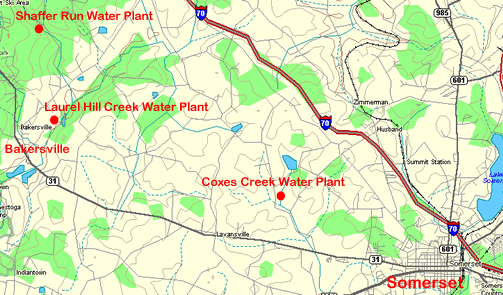
Our water sources are Laurel Hill Creek, Shaffer Run Wells and the Coxes Creek Wells. Sources of drinking water are subject to potential contamination by constituents that are naturally occurring or man-made. Those constituents can be microbes, organic or inorganic chemicals, or radioactive materials. All drinking water, including bottled water, may reasonably be expected to contain at least small amounts of some contaminants. The presence of contaminants does not necessarily indicate that the water poses a health risk. More Information about contaminants and potential health effects can be obtained by calling the Environmental Protection Agency's Safe Drinking Water Hotline at 1-800-426-4791.

Maximum Contaminant Level (MCL's) are set at very stringent levels for health effects. To understand the possible health effects described for many regulated constituents, a person would have to drink 2 liters of water every day at the MCL level for a lifetime to have a one-in-a-million chance of having the described health effect. Thank you for allowing us to continue providing your family with clean, quality water this year. In order to maintain a safe and dependable water supply we sometimes need to make improvements that will benefit all of our customers. These improvements are sometimes reflected as rate structure adjustments. Thank you for your understanding.

Some people may be more vulnerable to contaminants in drinking water than the general population. Immuno-compromised persons such as persons with cancer undergoing chemotherapy, persons who have undergone organ transplants, people with HIV/AIDS or other immune system disorders, some elderly, and infants can be particularly at risk for infections. These people should seek advice about drinking water from their health care providers. EPA/CDC guidelines on appropriate means to lessen the risk of infection by cryptosporidium and other microbiological contaminants are available from the Safe Drinking Water Hotline (800-426-4791).

Contaminants that may be present in source water include:

  • Microbial contaminants, such as viruses and bacteria, which may come from sewage treatment plants,
    septic system, agricultural livestock operations, and wildlife.
  • Inorganic contaminants, such as salts and metals, which can be naturally-occurring or result from urban
    stormwater runoff, industrial or domestic wastewater discharges, oil and gas production, mining, or farming.
    Pesticides and herbicides, which may come from a variety of sources such as agriculture, urban stormwater runoff, and residential uses.
  • Organic chemical contaminants, including synthetic and volatile organic chemicals, which are by products of industrial processes and petroleum production, and can also come from gas stations, urban stormwater runoff, and septic systems.
  • Radioactive contaminants, which can be naturally-occurring or be the result of oil and gas production and mining activities.

In order to ensure that tap water is safe to drink, EPA prescribes regulations which limit the amount of certain contaminants in water provided by public water systems. Food and Drug Administration regulations establish limits for contaminants in bottled water which must provide the same protection.

Water Quality Data

In this table you will find many terms and abbreviations you might not be familiar with. To help you better understand these terms we've provided the following definitions:

Parts per million (ppm) or Milligrams per liter (mg/l)-one part per million corresponds to one minute in two
years or a single penny in $10,000.
Parts per billion (ppb) or Micrograms per liter-one part per billion corresponds to one minute in 2,000 years, or a single penny in $10,000,000.
Nephelometric Turbidity Unit (NTU)-nephelometric turbidity unit is a measure of the clarity of water. Turbidity in excess of 5 NTU is just noticeable to the average person.
Action Level- the concentration of a contaminant which, if exceeded, triggers treatment or other requirements which a water system must follow.
Treatment Technique (TT)- A treatment technique is a required process intended to reduce the level of a contaminant in drinking water.
Maximum Contaminant Level-The "Maximum Allowed" (MCL) is the highest level of a contaminant that is allowed in drinking water. MCLs are set as close to the MCLGs as feasible using the best available treatment technology.
Maximum Contaminant Level Goal- The "Goal" (MCLG) is the level of a contaminant in drinking water below which there is no known or expected risk to health. MCLGs allow a margin of safety.
Maximum Residential Disinfectant Level (MRDL) - The highest level of a disinfectant allowed in drinking water. There is convincing evidence that addition of a disinfectant is necessary for control of microbial contaminants.
Maximum Residential Disinfectant Level Goal (MRDLG) - The level of a drinking water disinfectant below which there is no known or expected risk to health. MRDLGs do no reflect the benefits of the use of disinfectants to control microbial contamination.

TEST RESULTS
Microbiological Contaminants
Contaminant (Unit of
measurement)

Violation Y/N
Level
Detected
Range
MCLG
MCL
Likely Source of Contamination
Turbidity (ntu)
Combined Filter Effluent
N
0.19
.02-0.2
.3
TT
Soil Runoff
Entry Point Chlorine (ppm)
N
1.78
1.2-2.1
4.0
4.0
Water additive used to control microbes.
Distribution Chlorine (ppm)
N
1.42
0.8-1.9
4.0
4.0
Water additive used to control microbes.
Total Coliform
N
0.0
0.0
-
-
Naturally present in the enviroment.
Inorganic Contaminants
Contaminant (Unit of
measurement)
Violation
Y/N
Level
Detected
Range
MCLG
    MCL
Likely Source of Contamination
Trihalomethane (ppm)
N
0.027
0.02-0.04
0.08
0.08
By-product of drinking water chlorination
HAA5 (ppm)
N
0.017
0.0-0.03
-
-
By-product of drinking water chlorination
Total Organic Carbon (ppm)
N
0.91
0.0-2.0
10
10
Naturally decaying vegetation.
Nitrate (ppm)
N
0.23
(a)
10
10
Runoff from fertilizer use; Leaching from septic tanks; sewage; erosion of natural deposits.
Footnotes:
(a) Only one sample required.
(b) The lowest monthly percentage of samples meeting the turbidity limits specified in 141.73.
All samples met the turbidity limits.
(c) None of the 20 samples we collected exceeded the action level.


Source Locations  
 
 
  Facility #1
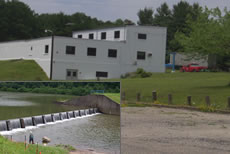
The main source of water is Laurel Hill Creek located
in Jefferson Township .5 miles north of Bakersville on the Bakersville/Edie Road .
 
  Facility #2
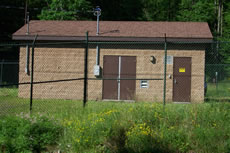
The newest System is the Shaffer Run Well System. Two wells are located on 650 acres of land owned by the Authority. It is .8 Miles from Rt. 31 on the Bakersville/Edie Road to Shaffer Run Road. Turn left on Shaffer Run Road and go approximately .3 miles to the plant.
   
Facility #3
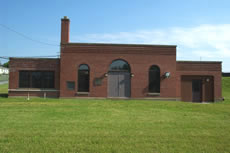
Coxes Creek Water Plant is the second source of water available to the system. It is located 3 miles West of Somerset, 1.5 miles North of Rt. 31 North on Coxes Creek Road.


We want our valued customers to be informed about their water utility.
If you want to learn more, please attend any of our regularly scheduled meetings.


** Somerset Borough Council meetings are held the
    fourth Mondays of every month at 7:30 PM.
** Somerset Municipal Water Authority meetings are held the
   third Monday of every month at 7:30 PM.

For additional information or questions please call 443-2661.
(Posted 3-24-06)

 
Return to the Home Page
All rights reserved to the Borough of Somerset     2005